
Top FM Transmitter Headrest Options for Global Buyers
Global buyers are no longer choosing an FM Transmitter Headrest by appearance alone. They expect stable audio, simple pairing, and comfortable installation. The market also reflects a wider shift toward connected driving. Bluetooth SIG’s 2024 Market Update projects more than 5.4 billion Bluetooth device shipments annually by 2028. That growth supports demand for compact in-car audio accessories, including headrest-based solutions.
However, performance varies sharply between vehicles and regions. Grand View Research’s automotive infotainment analysis identifies connectivity, voice control, and smartphone integration as major market drivers. These trends help explain why modern FM transmitter headrests often include Bluetooth, USB-C charging, hands-free calling, and memory functions. Yet features do not guarantee quality. A device may sound clear in a parked sedan but produce static on a long highway route.
This guide compares leading options for international buyers through practical criteria. We examine transmission stability, frequency coverage, microphone clarity, installation fit, power design, and user controls. Regional radio regulations also matter, because permitted FM frequencies and transmission limits differ across markets. Reputable certifications should be checked before purchase.
No single product suits every vehicle. That is worth admitting. Dashboard layout, windshield distance, headrest shape, and local interference can change the result. A reliable choice should therefore balance measured specifications with real-world testing. The best option is not always the most expensive one. It is the model that remains comfortable, compliant, and dependable during daily use.
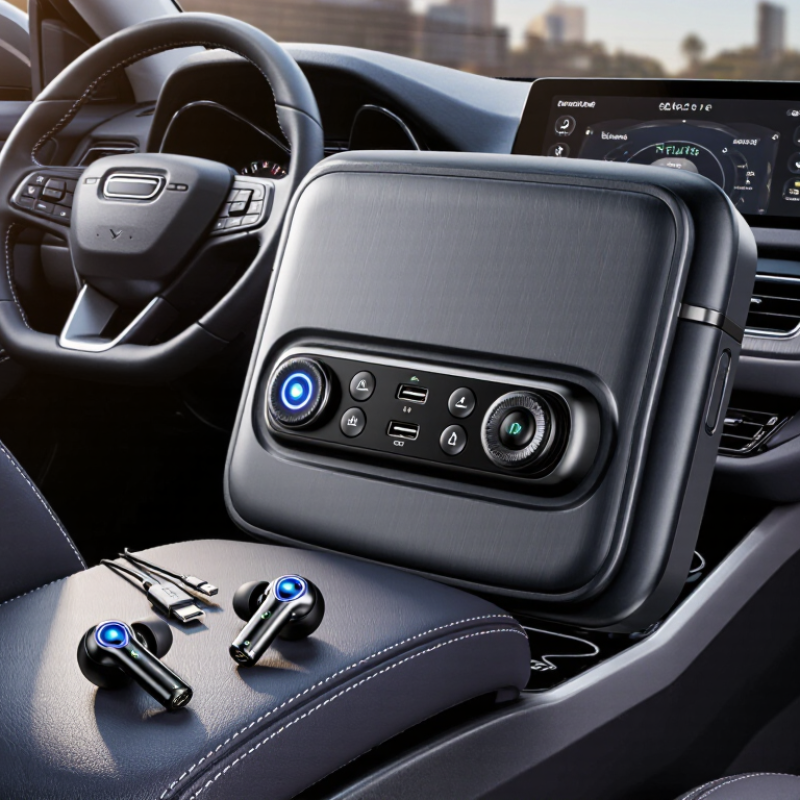
What a Headrest FM Transmitter Is and How It Works
A headrest FM transmitter is a compact audio device installed near a vehicle’s headrest. It sends sound from a phone, tablet, or media player to the car’s FM radio. The device does not stream through mobile networks. Instead, it creates a short-range radio signal on a selected FM frequency.
The process is simple. Connect the transmitter to the audio source, choose a clear frequency, and tune the vehicle radio to the same number. Audio then plays through the car speakers. Some models use Bluetooth, while others rely on a cable or USB connection. A stable power supply matters, especially during long journeys. Weak power can cause distortion, sudden silence, or repeated reconnection.
Frequency availability differs by country and city. Buyers should check local radio regulations and use only permitted, low-power settings. Nearby stations may create buzzing or overlapping voices, particularly in dense urban areas. Move the device slightly if the signal sounds uneven. Small changes help.
The headrest position can improve passenger access, but it may limit ventilation or cable movement. Measure the mounting area before buying. Real-world installation is rarely perfect. A loose strap can vibrate over rough roads, and Bluetooth pairing may fail after a vehicle restart. Testing the transmitter with the actual radio system remains more dependable than trusting specifications alone.
A headrest FM transmitter converts audio from a connected device into a low-power FM radio signal. The vehicle radio receives that signal when tuned to the same unused frequency. The chart shows representative FM broadcast tuning ranges used in several major markets, helping global buyers understand why a transmitter should support an appropriate frequency range for its destination.
Frequency ranges are representative regulatory bands and may vary by country or local allocation. Buyers should verify the permitted FM frequencies and transmission-power rules in the destination market.
Key Features to Compare in Headrest FM Transmitters
A headrest FM transmitter should be compared by measurable performance, not attractive packaging.
Start with frequency coverage and regional tuning steps. A device supporting 87.5–108 MHz may suit many markets, but local allocations still differ. Output strength also matters. In the United States, FCC Part 15.239 limits FM emissions to 250 microvolts per meter at three meters. Buyers should verify equivalent limits in their target country. Excessive output can create interference and regulatory problems.
Audio quality depends on more than advertised stereo support. Check signal-to-noise performance, channel stability, and background hiss during quiet scenes. Bluetooth compatibility is important for modern vehicles and portable sources.
The Bluetooth SIG 2024 Market Update estimates that 5.4 billion Bluetooth devices shipped globally in 2023. That figure supports broad compatibility, but it does not guarantee flawless pairing. Test reconnection after the vehicle restarts. Also inspect latency, especially when passengers watch video through headrest displays. Delays become distracting quickly.
Installation details deserve practical attention. Compare mounting depth, cable routing, ventilation, and connector durability. A transmitter that fits tightly may still strain the headrest wiring. Look for physical controls, clear frequency displays, and memory presets. These features help drivers avoid repeated adjustments.
Certification markings should match the destination market, not merely the factory origin. Product specifications can be incomplete. I would request laboratory test results, though smaller suppliers may not provide them. That uncertainty should influence purchasing decisions.
Top Headrest FM Transmitter Options for Different Vehicle Needs
Headrest FM transmitters serve different vehicle needs, so selection should begin with the cabin layout. Rear-seat passengers often need clear audio without disturbing the driver. A compact unit with adjustable volume and simple controls suits family cars. For larger vehicles, a stronger, stable signal helps reach the front radio without frequent retuning. Keep it simple.
In practical use, placement matters as much as transmitter power. Mounting near the headrest can shorten cable reach, especially in three-row vehicles. Check the device’s frequency range, power source, connector type, and compatibility with the vehicle radio.
Noise matters. A quiet cabin may reveal static that seems minor during a showroom test. Choose a model with secure mounting, visible controls, and a cable that does not cross the driver’s movement area. Local radio-use requirements should also be checked before operation.
Long-distance travelers may prefer memory presets and reliable heat management. Drivers using older vehicles might need a transmitter with flexible power input and basic audio support. Newer cars can require extra attention, since built-in systems may filter weak FM signals. No option is perfect. Even a well-designed transmitter may lose clarity near crowded broadcast areas or tall buildings. Testing it on familiar roads is more useful than trusting specifications alone. A useful purchase leaves passengers comfortable, controls reachable, and the driver free to focus.
Global Compatibility, Frequency Rules, and Safety Considerations
Top FM Transmitter Headrest Options for Global Buyers
A headrest FM transmitter should match the vehicle, radio band, and local regulations. Many regions use the 87.5–108 MHz range, but national allocations can differ. Japan, for example, uses a different lower-frequency range. Check the destination country’s regulator before purchase. Do not rely on a product page alone.
Global compatibility also depends on power and connection design. A 12-volt vehicle socket may not fit every car, while USB power can vary by model. Choose adjustable frequency settings, clear instructions, and a stable signal at short range. Test several channels near your parking location. Strong local stations may create static or interference. A neat specification sheet can still hide practical limits.
Safety deserves equal attention. The transmitter should not block rear visibility, cover seat-belt paths, or interfere with headrest movement. Keep cables away from airbags, hinges, and children’s hands. Avoid units that become hot after extended use. A firm mount matters on uneven roads. It should release without sharp edges. Check compliance markings, operating instructions, and warranty terms from reliable sellers. Requirements can change across borders, and some claims may be unclear. I would rather accept a slightly weaker feature set than guess about frequency legality or thermal safety.
How to Choose and Install the Right Headrest FM Transmitter
Choosing a headrest FM transmitter starts with vehicle fit, not appearance. Measure the headrest posts and check the device’s mounting range. A loose bracket can vibrate against the seat during normal driving. That noise becomes irritating quickly.
Confirm the transmitter’s power requirements before buying. Most models use a vehicle accessory socket, but cable length varies. Choose a unit with clear frequency controls and a readable display. It should support frequencies permitted in your country. Local radio regulations differ, so review official guidance before use. Avoid crowded frequencies near strong stations. A quiet channel usually produces cleaner audio. Test it while the vehicle is parked.
Installation should preserve visibility, comfort, and airbag clearance. Mount the transmitter behind or beside the headrest, never across the driver’s view. Route the cable along the seat edge, leaving enough slack for headrest adjustment. Keep it away from pedals, seat rails, and sharp metal. Secure loose sections with removable clips. Do not force the headrest downward. It may damage the mount or seat structure.
Check the sound from every passenger position. Rear-seat audio can seem clear while the front radio receives interference. Lower the transmitter volume, then adjust the vehicle radio gradually. This often reduces distortion. I have found that “maximum volume” is rarely the best setting. A small mismatch can sound surprisingly harsh. Recheck the installation after several drives, because fittings can loosen with movement.